

Why “I don't care about awards” is the most expensive excuse in marketing.
The rosé has been packed away, the yachts have sailed and another Cannes Lions Festival of Creativity is officially in the books.
Perhaps the whole event passed without you giving it a thought.
For many, indifference is too generous a word to describe their feelings about the 73-year-old festival. The skepticism is valid since the same week agencies are celebrating Lions and teamwork, half the industry is somewhere on LinkedIn announcing they've been let go. Only a handful of Canada's 5,000+ ad agencies and 600+ mid-to-large advertisers bring home medals. The same handful of global corporations – Heineken, IKEA, Kraft Heinz – collect most of the awards year after year. AB InBev was even named Creative Marketer of the Year for an unprecedented third time, the first company in the festival's history to receive that honour.
So, sure. Skeptics may be forgiven for thinking, "Good for them. What do awards have to do with my next quarter results?"
But skeptics are missing the point.
The Number That Matters to Your CFO and CEO
While the festival itself (and the humble-bragging that comes with winning trophies) may be overblown, the truth is that creatively awarded work builds business. Dismissing high-calibre creativity ignores decades of empirical data on marketing effectiveness. The most critical of which comes from Peter Field's ongoing analysis of the IPA databank.
"Creatively awarded campaigns generate 5.7 points of market share growth per 10 points of ESOV. Non-awarded campaigns generate a mere 0.5 points on the same measure."
True creative excellence delivers more than a ten-times efficiency advantage over safe, mediocre work making it the highest-ROI investment available to any marketing budget.
Field's subsequent research including his landmark The Link Between Creativity and Effectiveness and the 2019 Crisis in Creative Effectiveness shows these campaigns drive twice as much annual market share growth as non-awarded work, build genuine pricing power and sustain baseline volume without requiring constant discounting. The data has been replicated across the IPA, WARC and the Cannes Creative Effectiveness Lions for more than two decades. The business case for creativity is settled.
If there's no more debate, why do so many Canadian brands settle for safe, unawarded work? Because they are caught in Three Corporate Default Settings, each one a habit that feels like discipline in the short term but turns out to be self-sabotage in the long one.
Default Setting 1: Confusing Efficiency with Effectiveness
The lack of creative breakthroughs stems from a distinct misalignment in priorities. Our Sense.Maker editorial review tracked the share of attention across 14 leading trade and business publications during Cannes week. The results revealed a clear discrepancy between what the festival promotes and what the industry is obsessed with.
"Craft and Creative Courage" (the work the original festival was built to celebrate) received only 6 per cent of the editorial conversation, based on Sense.Maker's analysis. "AI as Infrastructure" commanded 24 per cent of headlines. The industry is more focused on optimization than impact.
Roughly 40 per cent of all Cannes Lions 2026 entries utilized AI in some capacity, celebrating the transition of artificial intelligence into a practical utility. Using AI to generate higher volumes of content at a faster pace simply automates mediocrity.
The belief that producing more assets for less money equals better marketing is a dangerous default. If an agency's primary proposal to you this year focuses on saving production costs through automated asset creation, they are essentially promising to make your brand invisible at a lower price point. You save on production, but you waste your media budget because no one notices the work.
Default Setting 2: The CEO Confidence Gap
There is a more fundamental barrier than budget or structure. Most CEOs were never trained to evaluate creative risk. According to Spencer Stuart, only 37 per cent of Fortune 500 CEOs have any functional marketing experience at all. When economic pressure builds, they default to what they can measure and control.
The consequences of that default are now visible in the data. The Boathouse CEO Study, which surveyed 150 major U.S. company CEOs in Jan. 2026, found that the share of CEOs who classify marketing as a profit centre dropped from 65 per cent to 40 per cent in a single year. Marketing did not suddenly become less effective. CEOs became less confident in their ability to judge its value. And CMOs less skilled at convincing them.
This matters because the work that moves markets requires a CEO who is willing to back a calculated bet. When Heinz implied its competitors made inferior ketchup without naming them, that required a CEO willing to provoke. When Popeyes pivoted its entire supply chain to capitalize on a pop-culture moment, that was an operational commitment made at the top of the organization. Neither of those decisions would have survived without CEO engagement.
The brands that dominate Cannes year after year share one structural trait: their CEOs treat creative ambition as a corporate growth strategy, not a departmental function. That is not a personality trait. It is a deliberate organizational choice.
Default Setting 3: The Addiction to the Next Quarter
The third reason brands miss out on brilliant work is a lack of patience. Historical data proves that maximum marketing effectiveness requires a specific capital allocation: roughly 60 per cent dedicated to long-term brand building and 40 per cent allocated to short-term sales activation. Most mid-market brands lack the patience that effectiveness requires.
For over a decade, brands have steadily shifted budgets away from long-term equity to fund short-term digital performance marketing. Most mid-market brands now operate well below that 60 per cent threshold on the brand side. Slashing brand building to fund performance marketing feels like a quick win to the CFO, but it creates a predictable spiral. Cut brand investment to hit short-term targets and you weaken the brand that was generating baseline volume – forcing more discounts, more cuts and a spiral that is very difficult to reverse.
Why Creative Excellence Has No Budget Requirement
The conditions that produce award-winning work are not proprietary to large budgets. They are proprietary to a certain kind of organizational decision-making. Consider three campaigns from Cannes Lions 2026 that have nothing in common except the willingness to commit to an uncomfortable idea.
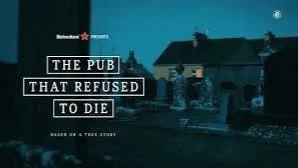
Heineken won the Creative Strategy Grand Prix for "The Pub That Refused to Die" a documentary about 26 villagers in rural Ireland who pooled €300,000 to buy and reopen their town's last pub. Heineken did not sponsor a stadium or buy a Super Bowl slot. It trained the villagers to run a bar, funded a documentary that premiered at the Dublin International Film Festival and built a resource hub to help other communities do the same. Ireland has lost 2,100 pubs in twenty years. Heineken found a genuine cultural wound, committed to it over time and put the brand at the centre of a movement rather than a campaign. The result was a 99 percent community-owned pub survival rate across participating towns and a brand that earned its place in Irish culture rather than buying it.
Columbia Sportswear won the Brand Experience Grand Prix for "Expedition Impossible": a challenge, signed by the CEO personally in a full-page New York Times ad, offering the entire company to anyone who could prove the Earth is flat (It helps that Columbia is still majority owned by the Boyle family and Timothy is Chairman, President and CEO). The campaign generated 80 million in earned audience and 10 million organic views. It was also Columbia's first major brand repositioning in over a decade. The CEO put his name on a provocation. That is not a media buy. That is a leadership decision.

AXA France won the Creative Effectiveness Grand Prix for "Three Words": adding the words "and domestic violence" to its home insurance policy, making emergency relocation accessible to victims who previously had no financial recourse. The campaign required legal, operations and finance teams to change a product that had been unchanged for decades. It produced a 67 per cent brand consideration rate against a 43 per cent market norm and a 9 per cent uptick in new contracts. It also required a CEO willing to authorize a product change based on a creative brief.

The common thread across all three is not scale. It is the quality of the brief, the depth of the client commitment and the organizational patience to let a singular idea develop rather than fragmenting spend across a dozen tactical executions that collectively add up to nothing.
The Cannes-WARC Effectiveness Code analyzed nearly 5,000 global effectiveness cases and confirmed what these wins illustrate in practice: the single greatest predictor of marketing ROI is Creative Commitment: a composite of media budget, campaign duration and channel breadth. The brands that consistently dominate do not slice their investment into microscopic six-week bursts that evaporate before the consumer notices them. They back a singular, culturally resonant idea with conviction and stay with it long enough for it to work.
What is striking is what the formal festival conversations barely mentioned: cultural observation, product truth, creative patience. The industry spent the week talking about AI infrastructure, platform efficiency and measurement frameworks. The gap between what the data proves and what the industry prefers to discuss is, in itself, a diagnosis.
The Vendor Trap
If your brand is not producing this calibre of work, the reason is closer to home than you think.
For decades, the agency ecosystem has conditioned clients to buy marketing services by the hour, rather than purchasing ideas based on the commercial value they unlock. That model makes it economically logical for agencies to deliver safe, uninspired, forgettable work.
The brands that consistently dominate markets reject this vendor dynamic. They treat their agencies as core business partners, provide deep business-problem briefs rather than shallow tactical requests, insulate creative ideas from death-by-committee and measure success over years rather than quarters. That is an operational choice made by the client.
The Real Cost of Playing Safe
For the hundreds of Canadian brands that will never enter an award show, the real issue is much closer to home. It is the gap between the forgettable work you currently settle for and the highly efficient, culturally impactful work your business deserves.
Creative excellence is not an expensive luxury reserved for global conglomerates. It is the single most commercially efficient use of marketing budget available to you. Especially if you can't outspend the competition.
The brands that win do not win because they have more money; they win because they have made a different set of choices about the function of marketing.
The question is not whether your brand can afford to pursue creative bravery. The question is whether your business can afford the long-term cost of playing safe. And how to ensure your agency brings you that kind of work.
If you’re wondering how to ensure your agency is giving you Cannes-worthy work (with or without the Rosé), I’d love to hear from you at arthur@sensemaker.ca.